How much does BOAS surgery cost?
How much does BOAS surgery cost?
$800 – $2,500 average cost for stenotic nares surgery
$1,500 – $5,000 average cost for full corrective surgery

Average BOAS surgery cost
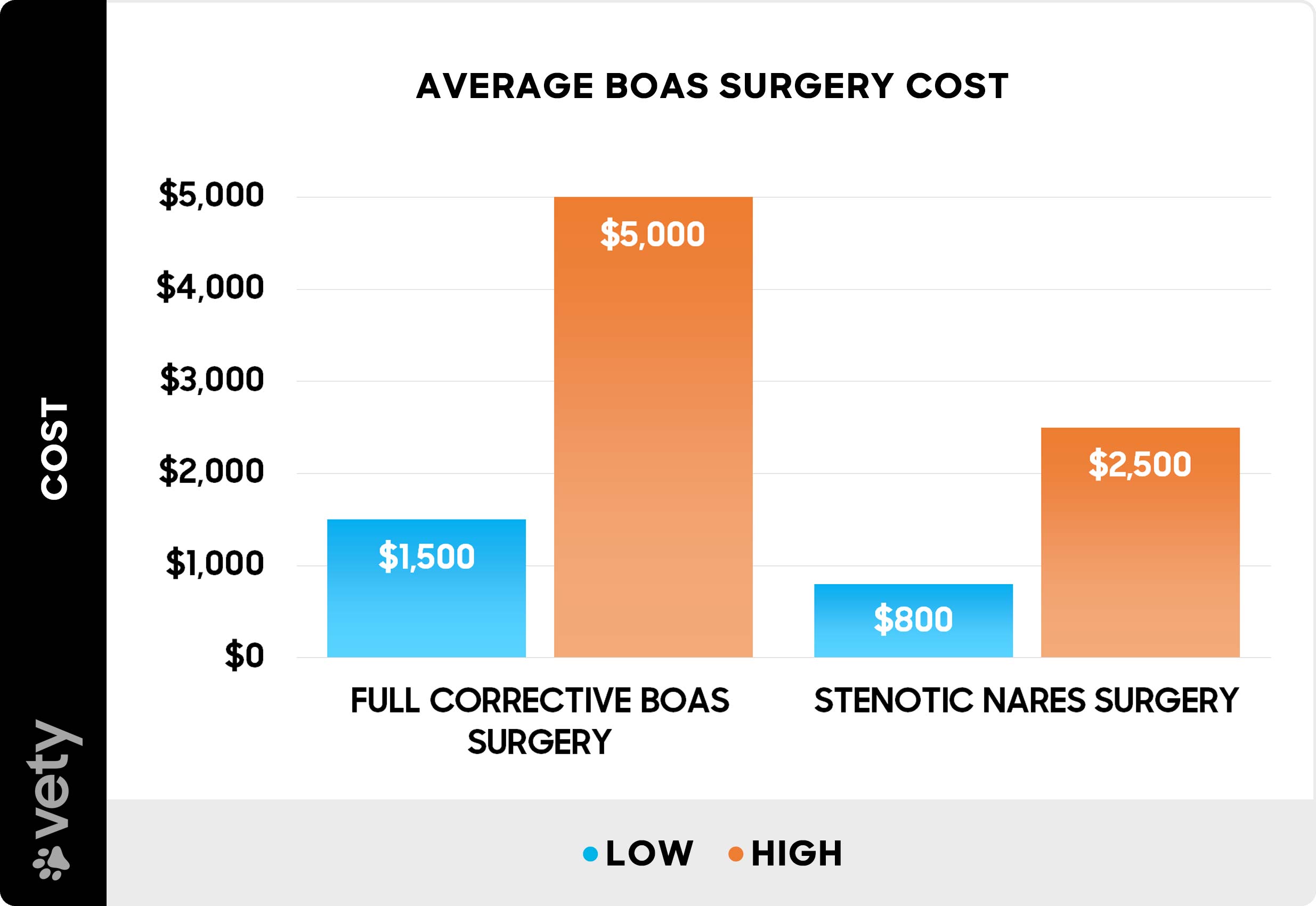
BOAS surgery costs $1,500 to $5,000 on average for full corrective surgery, while stenotic nares surgery costs $800 to $2,500 on its own. Your total cost depends on the complexity of your dog's case, the diagnostic tests needed, your veterinary provider, and your location.
| Surgery type | Average cost |
|---|---|
| Full corrective BOAS surgery | $1,500 – $5,000 |
| Stenotic nares surgery | $800 – $2,500 |
BOAS surgery fees typically include a physical examination, anesthesia, the surgical procedure, and a follow-up exam. Some veterinarians include antibiotics and painkillers in their fee but may charge extra for blood work and other diagnostic tests like X-rays or CT scans.
What is Brachycephalic Obstructive Airway Syndrome (BOAS)?
Brachycephalic Obstructive Airway Syndrome (BOAS) is a breathing disorder that affects dogs with shortened skulls and flattened faces. These breeds have narrow airways that restrict airflow and make breathing difficult, especially during exercise or in warm weather.
Dogs with BOAS often breathe noisily, snore loudly, have difficulty catching their breath after mild activity, and may experience episodes of respiratory distress. Without treatment, BOAS can significantly impact your dog's quality of life and lead to serious complications or respiratory failure.
What causes BOAS?
BOAS is caused by the physical characteristics bred into flat-faced dogs. Over generations, selective breeding for cute, pushed-in faces has created multiple airway problems including pinched nostrils, elongated soft palates, and narrowed windpipes.
Breeds most commonly affected by BOAS include:
French Bulldogs
English Bulldogs
Pugs
Boston Terriers
Boxers
Shih Tzus
Pekingese
What is BOAS surgery?
BOAS surgery involves surgical correction of the anatomical problems causing breathing difficulties. The specific procedures performed depend on your dog's individual anatomy and the severity of their condition.
Common surgical procedures include:
Stenotic nares surgery: Widening narrowed nostrils to improve airflow
Soft palate resection: Trimming an elongated soft palate that blocks the airway
Laryngeal saccule removal: Removing everted tissue from the larynx
Tonsillectomy: Removing enlarged tonsils if they obstruct breathing
Most dogs undergo multiple procedures during a single surgery. Your veterinarian will recommend the combination of procedures best suited to your dog's specific airway abnormalities.
Signs your dog may need BOAS surgery
Consult your veterinarian if your brachycephalic dog exhibits any of these symptoms:
Loud snoring or noisy breathing, especially during exercise
Difficulty breathing or gasping for air
Reduced tolerance for exercise or play
Blue or purple gums indicating poor oxygenation
Frequent coughing or gagging
Fainting or collapse episodes
Overheating easily in warm weather
Early diagnosis and intervention often lead to better surgical outcomes and improved quality of life for your dog.
What to expect during recovery
Recovery from BOAS surgery typically takes 2 to 4 weeks. Your dog will need close monitoring during the first 24 to 48 hours after surgery, either at the veterinary hospital or at home with detailed care instructions.
During the recovery period:
Keep your dog calm and restrict physical activity.
Administer prescribed pain medications and antibiotics as directed.
Feed soft food for the first week to minimize throat irritation.
Watch for signs of complications like excessive swelling, bleeding, or difficulty breathing.
Attend all scheduled follow-up appointments.
Most dogs show improvement in breathing within days of surgery. Full benefits become apparent after complete healing, typically 4 to 6 weeks post-surgery.
BOAS surgery cost factors
Several factors affect the total cost of BOAS surgery. Ask your vet which diagnostic tests, services, and medications their fee includes.
Complexity of the case: Costs are higher for complex surgeries that involve full correction compared to stenotic nares surgery alone.
Veterinary clinic or hospital: Specialty veterinary hospitals typically charge more than general practice veterinarians. However, these facilities often have specially trained staff and advanced equipment that may be necessary for complex cases.
Pre-surgical tests: Your dog may need blood work, X-rays, and other diagnostic tests before surgery. Common tests and fees include:
A dog blood test costs $100 to $200.
Dog X-rays cost $150 to $250 per image.
A dog CT scan costs $1,500 to $3,500.
Location: Veterinary costs vary significantly by geographic region. Vets in major cities and areas with higher costs of living typically charge more compared to those in rural areas.
Post-op medications & supplies: Pain management medications, antibiotics, and other post-surgical treatments can add to your total cost. Your dog may also need an Elizabethan collar, also called a cone, to prevent them from rubbing their face or snout.
FAQs about BOAS surgery
Does pet insurance cover BOAS surgery?
Many pet insurance policies cover BOAS surgery if your dog develops symptoms after enrollment. However, policies typically exclude pre-existing conditions. Some insurers may require a waiting period before covering respiratory conditions in brachycephalic breeds.
Review your policy carefully and contact your pet insurance provider to confirm coverage before scheduling surgery.
Is BOAS surgery dangerous?
BOAS surgery carries risks like any surgical procedure requiring anesthesia. Brachycephalic breeds face higher anesthesia risks due to their compromised airways. However, experienced veterinary surgeons use specialized protocols to minimize these risks.
Most dogs tolerate the surgery well and experience significant improvement in their quality of life. The long-term risks of leaving BOAS untreated often outweigh the surgical risks.
Do all French bulldogs need nose surgery?
Not all French Bulldogs require BOAS surgery, but the breed is highly predisposed to the condition. Your vet can assess your dog's individual anatomy and breathing function to determine if surgery is necessary. Early intervention often produces better outcomes than waiting until symptoms become severe.
Questions to ask your veterinarian
Ask your vet these important questions to ensure you understand the reasons for the surgery, the risks, and the procedure and recovery process:
How many BOAS surgeries have you performed?
Which corrective procedures do you recommend for my dog?
What are the risks and benefits of the surgery?
What is the expected recovery time, and when can my dog return to normal activities?
What happens if complications arise during or after surgery?
What signs should I watch out for during recovery?
What post-operative care will my dog need?
What pain management options are available for my dog?
When should I schedule follow-up appointments?
How many follow-up appointments will be necessary?
What are the long-term prognosis and potential for full recovery?
Will my dog need ongoing medications or special care?
Are there any alternative treatment options?
What is the total estimated cost, including all diagnostic tests and post-operative care?
Using our proprietary cost database, in-depth research, and collaboration with industry experts, we deliver accurate, up-to-date pricing and insights you can trust, every time.