
How much does epulis surgery cost for dogs?
How much does epulis surgery cost for dogs?
$600 – $1,500 average cost

Average epulis dog surgery cost
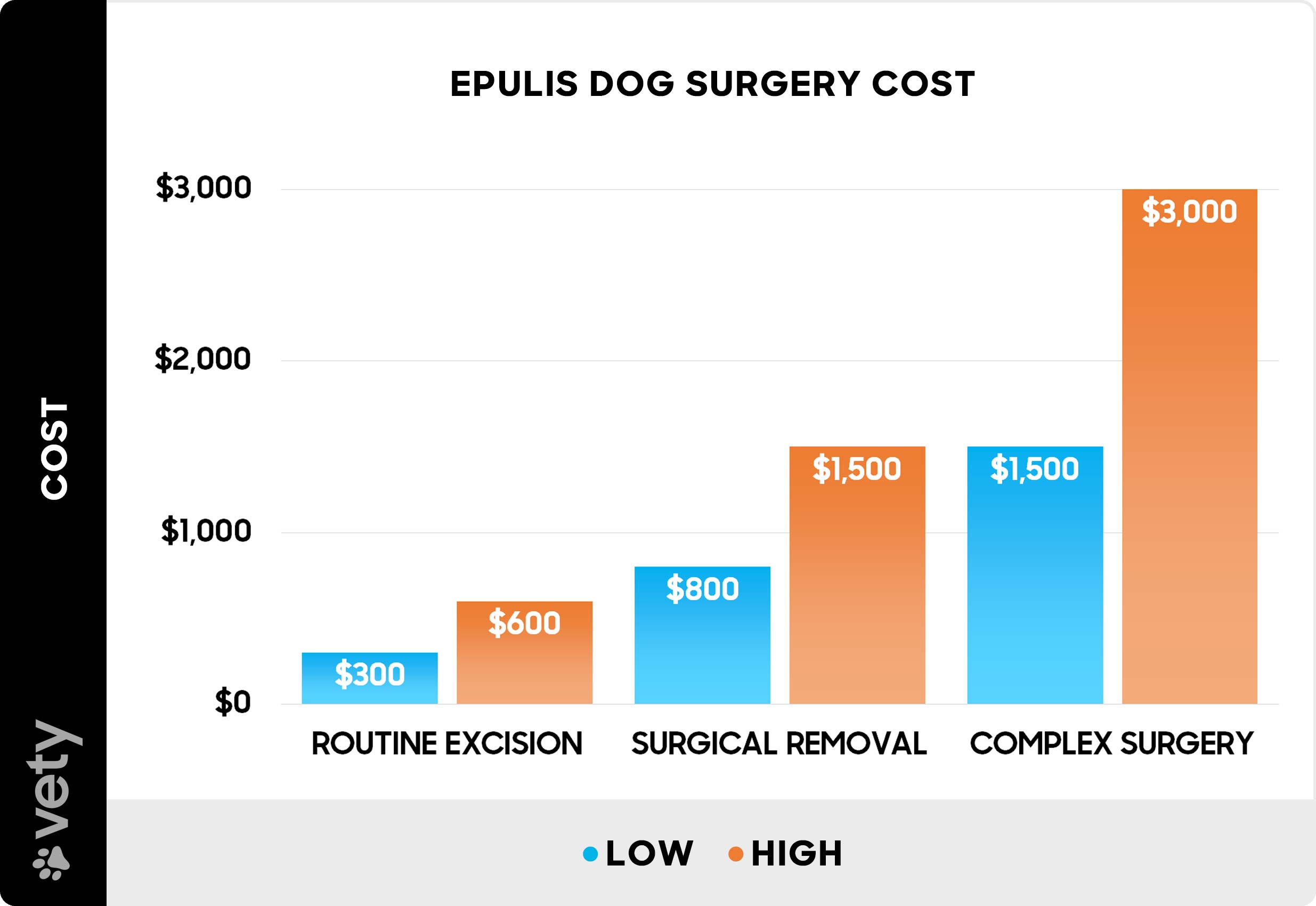
Epulis surgery for dogs costs $600 to $1,500 on average, but costs can be as low as $300 for a simple removal or as high as $2,000+ for a complex surgery where the tumor has grown into bone. The total cost depends on the complexity of the case, diagnostic testing and anesthesia fees, the provider, and your location.
| Procedure | Average cost |
|---|---|
| Routine excision by general vet | $300 – $600 |
| Surgical removal by veterinary dental surgeon | $800 – $1,500 |
| Complex surgery with 3D imaging or bone resection | $1,500 – $3,000+ |
What is epulis in dogs?
Epulis is a benign oral tumor that grows from the periodontal ligament, the tissue connecting a dog's teeth to the jawbone. These growths appear as firm masses along the gumline, typically pink in color and similar in appearance to surrounding gum tissue. They're one of the most common oral tumors in dogs, particularly in middle-aged and older pets.
While most epulis tumors are benign, some types can be locally aggressive. This means they may grow into the jawbone or surrounding tissue even though they rarely spread to other parts of the body. Early detection and treatment are key to preventing complications and preserving your dog's oral health.
Types of epulis in dogs
There are three main types of epulis in dogs:
Fibromatous epulis are the most common type, characterized by smooth, firm, pink masses that grow slowly and are usually less invasive. They often have a mushroom-like or stalked appearance.
Ossifying epulis are similar to fibromatous epulis but contain bone cells within the growth. These smooth, pink masses may show bone formation on dental x-rays.
Acanthomatous epulis are the most aggressive type, with a rough, cauliflower-like appearance that's often ulcerated. This type commonly affects the front of the lower jaw and frequently invades surrounding bone, though it doesn't spread to distant organs.
Symptoms of epulis in dogs
Common symptoms of epulis in dogs include a visible mass or lump on the gums, excessive drooling, and bad breath. Other common symptoms include:
Bleeding from the mouth
Difficulty eating or a reluctance to eat leading to weight loss
Dropping food while chewing
Pawing at the mouth or other behavior changes due to discomfort
Swelling of the mouth or face
Loosened teeth close to the lump
Causes
The exact cause of epulis in dogs is unknown, but experts believe several contributing factors may play a role. Chronic inflammation in the mouth, such as from periodontal disease or repeated trauma, may lead to tissue overgrowth. Middle-aged and older dogs are most affected.
Genetics and breed predisposition may also be a factor, with breeds like Boxers, Bulldogs, Shetland Sheepdogs, and Golden Retrievers more likely to develop epulis.
Diagnosis
Diagnosing epulis in dogs involves a combination of physical examination and diagnostic tests to confirm the type and extent of the growth. Veterinarians usually begin with a thorough oral exam, then perform the following:
Blood work: A standard dog blood panel costs $100 to $200 and is performed before surgery to check overall health and organ function.
Biopsy or fine-needle aspirate: Doctors collect a sample of the growth and send it for lab analysis. A dog biopsy costs $200 to $400.
Dental x-rays: Dental x-rays cost $40 to $125 per image to show if the tumor involves the bone or deeper tissues.
Advanced imaging: A dog CT scan costs $1,500 to $3,500 for complex cases.
Treatment
Surgery is the primary treatment for epulis in dogs. The goal is to completely remove the tumor along with a margin of healthy tissue to prevent regrowth. Simple cases may only require excision of the mass, while aggressive types often need removal of affected teeth and surrounding bone.
For tumors that have invaded the jawbone, your vet may recommend a partial jaw removal. Radiation therapy may be used for tumors that are difficult to remove completely or when preserving jaw function is desired.
Recovery
Most dogs recover from epulis surgery quickly, with the initial healing period lasting about 5 to 7 days and complete healing taking two to three weeks. During this time, the mouth may be sensitive, and activity should be kept light. More extensive procedures or removal of larger masses may require additional weeks for the mouth to fully heal.
After surgery, most dogs need:
Pain medication to keep them comfortable
Antibiotics if prescribed to prevent infection
E-collar to avoid licking or pawing at stitches
Soft food for several days or until instructed otherwise
Follow-up visits to the vet to monitor healing progress
What affects the cost of epulis surgery for dogs?
Several factors can influence the total cost of epulis surgery:
Complexity of the case: Costs are higher for complex cases, such as when the tumor has grown into bone.
Veterinary clinic or hospital: Specialty veterinary hospitals charge more than general practice veterinarians. However, these facilities often have advanced equipment and specialized staff that may be necessary for complex surgeries.
Location: Veterinary costs vary significantly by geographic region. Vets in major metropolitan areas tend to charge more compared to those in rural areas.
Post-op care: Pain management medications, antibiotics, and other post-surgical treatments can add to the total cost. These medications are essential for your dog's recovery and comfort.
Dental cleaning
While there is no way to prevent future epulis tumors from forming, your vet may recommend professional dental cleaning to improve your dog's oral health. Dog teeth cleaning costs $600 to $1,500, including anesthesia.
FAQs about epulis
Can epulis be treated without surgery?
Surgery is the most common treatment for epulis in dogs. These tumors don't respond to medications and won't go away on their own. Untreated epulis will continue to grow and can cause pain, difficulty eating, and bone damage.
For dogs who cannot undergo surgery due to health concerns, radiation therapy may be an alternative treatment option.
Can epulis kill a dog?
Epulis itself is not typically life-threatening, as these tumors rarely spread to other organs. However, if left untreated, an epulis can grow large enough to cause serious complications. Large tumors can make eating difficult, leading to malnutrition and weight loss.
Aggressive types that invade the jawbone can cause severe pain, bone fractures, and secondary infections. While the tumor itself may not be fatal, these complications can become life-threatening if not addressed. With proper treatment, most dogs have an excellent prognosis and can live a normal lifespan.
Does pet insurance cover epulis surgery?
Pet insurance may cover the cost of epulis surgery for dogs if your policy is in effect before symptoms develop. Many comprehensive policies cover surgeries and related treatments but exclude pre-existing conditions. However, coverage varies significantly by provider, and some policies exclude oral surgeries.
Pet insurance costs $35 to $75+ per month for an accident-and-illness policy.
Questions to ask your veterinarian
Ask your veterinarian these important questions to ensure you understand the surgical procedure, risks, and recovery process:
How many epulis removal surgeries have you performed?
What are the risks and benefits of the surgery?
Are there any alternative treatment options?
What is the expected recovery time?
What post-operative care will my dog need?
What signs should I watch out for during recovery?
When should I schedule follow-up appointments?
What is the total estimated cost, including all fees?
Using our proprietary cost database, in-depth research, and collaboration with industry experts, we deliver accurate, up-to-date pricing and insights you can trust, every time.