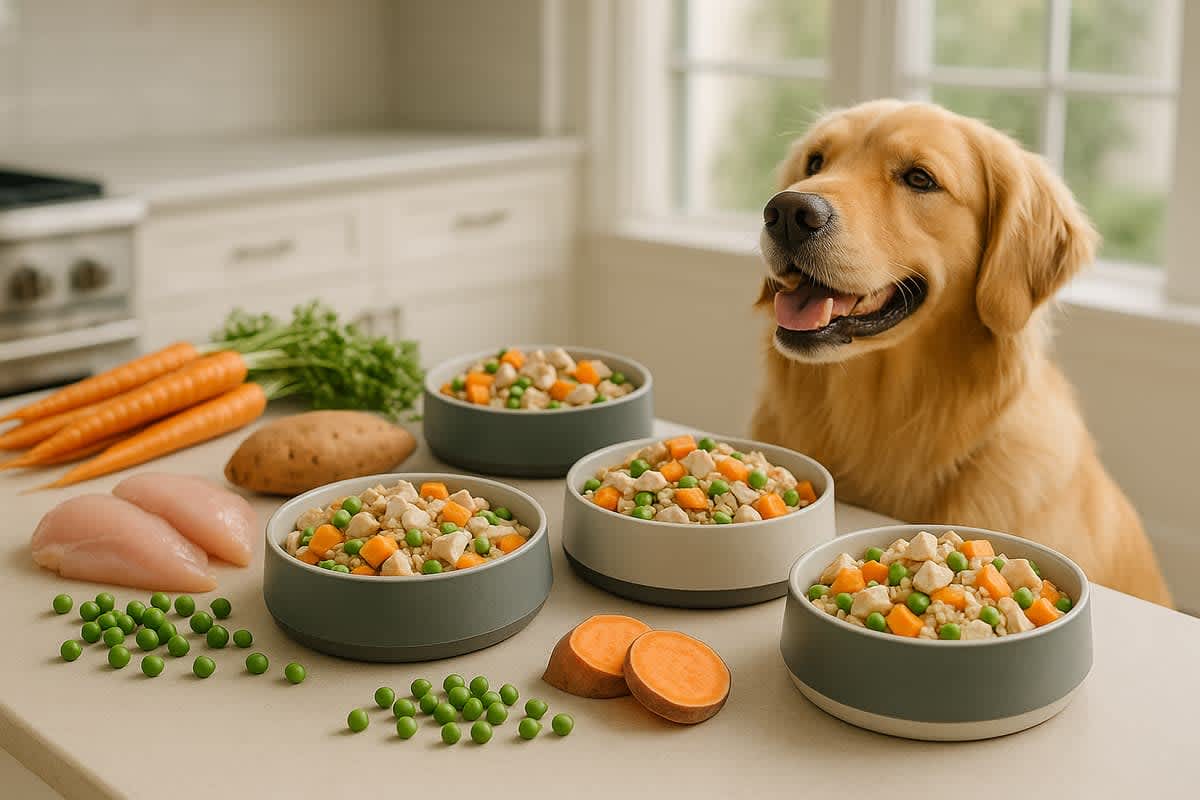
What is the best fresh dog food?
What is the best fresh dog food?
$2 – $12+ per day (The Farmer's Dog)
$3 – $14+ per day (JustFoodForDogs)
$1.50 – $10+ per day (Spot & Tango)

Top Fresh Dog Food Brands for 2025
Fresh dog food has become one of the fastest-growing categories in pet nutrition, and for good reason. Made with human-grade ingredients, minimally processed, and often formulated by veterinary nutritionists, fresh dog food delivers whole proteins, vegetables, and grains without the artificial preservatives, fillers, or mystery meals found in traditional kibble. Whether you're looking to improve your dog's digestion, help them lose weight, clear up skin issues, or simply feed them something you'd feel good about, the best fresh dog food brands make it easier than ever.
We've evaluated the top fresh dog food services and brands based on ingredient quality, veterinary involvement, nutritional completeness, pricing, and real-world results reported by pet parents.
| Brand | Best For | Key Feature | Starting Price Per Day |
|---|---|---|---|
| The Farmer's Dog | Overall best | Personalized meal plans, USDA-quality ingredients | $2 – $12+ |
| JustFoodForDogs | Vet-backed nutrition | #1 vet-recommended, university-led research | $3 – $14+ |
| Nom Nom | Portion precision | Board-certified nutritionist formulated, pre-portioned | $3 – $13+ |
| Ollie | Picky eaters | Multiple protein options, high palatability | $3 – $12+ |
| Spot & Tango | Budget-friendly fresh food | Fresh and fresh-dried options for flexibility | $1.50 – $10+ |
| Freshpet | Retail convenience | Available in grocery stores, refrigerated rolls and bags | $1 – $5+ |
| Open Farm | Ethically sourced ingredients | Humanely raised proteins, transparent sourcing | $3 – $14+ |
What Is Fresh Dog Food?
Fresh dog food is cooked food made from whole, real ingredients. It typically features human-grade proteins, vegetables, and grains that are minimally processed and kept refrigerated or frozen rather than shelf-stable. Unlike kibble, which is extruded at extremely high temperatures and loaded with preservatives to sit on shelves for months, fresh dog food retains more of its natural nutrients.
| Feature | Fresh Dog Food | Traditional Kibble |
|---|---|---|
| Ingredients | Whole, human-grade proteins and vegetables | Rendered meals, by-products, fillers |
| Processing | Gently cooked at low temperatures | Extruded at high heat |
| Preservatives | None or minimal | Artificial or chemical preservatives |
| Storage | Refrigerated or frozen | Room temperature shelf-stable |
| Nutrient Retention | Higher due to gentle cooking | Lower due to extreme heat processing |
| Cost Per Day (Medium Dog) | $3 – $10+ | $0.50 – $3 |
Most fresh dog food brands formulate their recipes to meet AAFCO (Association of American Feed Control Officials) standards for complete and balanced nutrition. This means they can serve as your dog's sole diet rather than just a topper or supplement.
Fresh food typically arrives in pre-portioned packs based on your dog's age, weight, breed, and activity level. Some brands ship directly to your door on a subscription basis, while others like Freshpet are available in refrigerated sections at grocery and pet stores.
Best Fresh Dog Food Brands Reviewed
Choosing the right brand depends on your dog's specific needs, your budget, and how you prefer to shop. Here's a closer look at each top brand and what makes it stand out.
The Farmer's Dog: Best Overall
The Farmer's Dog is widely considered the gold standard in fresh dog food delivery. Every meal is pre-portioned based on a profile you create for your dog, with recipes developed by board-certified veterinary nutritionists using USDA-quality ingredients.
- Protein options: Beef, chicken, turkey, pork
- Key ingredients: Sweet potatoes, lentils, carrots, spinach, fish oil
- Pricing: Starts around $2 per day for small dogs; medium to large dogs typically pay $5 to $12+ per day
- Delivery: Subscription-based, shipped frozen to your door
- Standout feature: Simple, clean ingredient lists with no fillers, by-products, or artificial anything
Pet parents frequently report improvements in energy, coat quality, and stool consistency within weeks of switching. The packaging is eco-friendly, and the company offers a satisfaction guarantee on your first order.
JustFoodForDogs: Best for Veterinary-Backed Nutrition
JustFoodForDogs is the #1 vet-recommended fresh dog food brand in the United States, backed by a decade of university-led research. Their recipes are formulated by a team that includes board-certified veterinary nutritionists and toxicologists, and their meals are prepared in open kitchens you can actually visit in person.
- Protein options: Chicken, beef, lamb, venison, fish, turkey
- Formats: Fresh frozen, pantry fresh (shelf-stable), and their newer "JustFresh" refrigerated line
- Pricing: Starts around $3 per day for small dogs; $7 to $14+ per day for larger breeds
- Standout feature: Targeted nutrition diets for joint health, skin and coat, digestion, and weight management
- Veterinary support: Custom diet service with prescribed meals for dogs with specific medical conditions
According to their 2025 customer survey, the majority of JustFoodForDogs customers report their dogs maintained a healthier weight, had a healthier-looking coat, and showed more excitement at mealtime. Their transparency, with open kitchens in multiple cities including New York, Los Angeles, and Chicago, sets them apart from competitors who cook behind closed doors.
Nom Nom: Best for Portion Precision
Nom Nom (now part of the Mars Petcare family) delivers fresh, restaurant-quality meals in individually pre-portioned packets. Each recipe is formulated by Dr. Justin Shmalberg, a board-certified veterinary nutritionist, using ingredients sourced from trusted U.S. suppliers.
- Protein options: Beef, chicken, turkey, pork
- Key ingredients: Brown rice, eggs, carrots, kale, fish oil
- Pricing: Around $3 to $13+ per day depending on dog size
- Standout feature: A proprietary nutrient mix added to every recipe to ensure complete and balanced nutrition
Nom Nom also includes a microbiome testing kit option, which analyzes your dog's gut health and helps guide dietary recommendations. This level of personalization is hard to find elsewhere.
Ollie: Best for Picky Eaters
Ollie has built a strong reputation for making fresh food that even the most finicky dogs devour. They offer both fresh (gently cooked) and baked recipes, giving pet parents flexibility between refrigerated meals and a more shelf-stable option.
- Protein options: Beef, chicken, turkey, lamb
- Formats: Fresh cooked, baked dry food
- Pricing: Starts around $3 per day for small dogs; $6 to $12+ per day for larger dogs
- Standout feature: High palatability and a "mix and match" option to blend fresh and baked food, which can reduce cost
Ollie's customization quiz factors in your dog's breed, weight, age, activity level, allergies, and body type. The meals arrive frozen in easy-to-store containers with clear feeding instructions.
Spot & Tango: Best Budget-Friendly Option
Spot & Tango stands out by offering both fresh cooked meals and a unique "UnKibble," a fresh-dried food that provides many of the benefits of fresh food at a lower price point. This makes it one of the most accessible fresh dog food brands for budget-conscious pet parents.
- Protein options: Beef, turkey, duck, lamb
- Formats: Fresh frozen meals and UnKibble (fresh dried)
- Pricing: Fresh meals start around $3 per day; UnKibble starts at approximately $1.50 per day
- Standout feature: The UnKibble line uses a gentle drying process instead of high-heat extrusion, preserving nutrients while staying shelf-stable
For pet parents who want to transition gradually or supplement kibble with fresh food without the full cost, Spot & Tango's dual-format approach offers excellent flexibility.
Freshpet: Best for Retail Convenience
Freshpet is the easiest fresh dog food to buy because you don't need a subscription. Their products are sold in dedicated refrigerators at major retailers like Walmart, Target, PetSmart, and most grocery stores across the country.
- Protein options: Chicken, beef, turkey, salmon, lamb
- Formats: Refrigerated rolls, bagged meals, and single-serve cups
- Pricing: Around $1 to $5+ per day depending on dog size and product line
- Standout feature: No subscription required, available at over 25,000 retail locations
Freshpet is ideal for pet parents who want to upgrade from kibble without committing to a delivery service. While not as personalized as subscription brands, it still provides real, recognizable ingredients without artificial preservatives.
Open Farm: Best for Ethical Sourcing
Open Farm has earned a loyal following among pet parents who care deeply about where their dog's food comes from. Every protein is humanely raised, and the company provides full transparency on sourcing through their website.
- Protein options: Chicken, beef, turkey, salmon, pork, lamb
- Formats: Gently cooked frozen meals, freeze-dried raw, and dry food
- Pricing: Around $3 to $14+ per day for fresh cooked meals
- Standout feature: Certified Humane proteins and ocean-wise sustainable seafood
Open Farm also offers a "Gently Cooked" line shipped frozen, made with non-GMO fruits and vegetables and humanely raised meats. It's one of the few fresh food brands that lets you trace every ingredient back to its source.
Benefits of Fresh Dog Food
Switching from processed kibble to fresh food can produce noticeable improvements in your dog's health, often within weeks. The benefits are well documented by veterinary research and widely reported by pet owners.
| Benefit | Why It Happens |
|---|---|
| Improved digestion | Whole, minimally processed ingredients are easier to break down and absorb |
| Healthier skin and coat | Higher-quality fats and omega fatty acids from real fish oil and animal proteins |
| Better weight management | Pre-portioned meals with precise calorie counts prevent overfeeding |
| Increased energy | Higher nutrient bioavailability compared to heat-extruded kibble |
| Smaller, firmer stools | Less filler means the body uses more of the food and produces less waste |
| Reduced allergy symptoms | Limited, identifiable ingredients make it easier to avoid allergens |
| Greater mealtime excitement | Real food smells and tastes better than processed kibble |
Research from the University of Illinois found that fresh, lightly processed dog food is significantly more digestible than extruded kibble, meaning dogs absorb more nutrients per calorie consumed. JustFoodForDogs has also published studies showing their recipes support healthy immune function in dogs.
Many pet parents report that dogs with chronic conditions, including pancreatitis, kidney disease, and cancer, respond better when switched to a fresh diet formulated under veterinary guidance.
The content of this article is for educational purposes only and does not constitute veterinary medical advice. Always consult your veterinarian before making significant changes to your dog's diet, especially if your pet has existing health conditions, food allergies, or is on prescription medication.
How Much Does Fresh Dog Food Cost?
Fresh dog food costs significantly more than kibble, but prices vary widely based on your dog's size, the brand you choose, and whether you feed fresh food exclusively or use it as a topper. Most pet parents spend between $3 and $12 per day for a medium-sized dog.
| Dog Size | Daily Cost (Full Fresh Diet) | Monthly Cost Estimate |
|---|---|---|
| Small (under 20 lbs) | $2 – $5 | $60 – $150 |
| Medium (20 to 50 lbs) | $5 – $10 | $150 – $300 |
| Large (50 to 80 lbs) | $8 – $14 | $240 – $420 |
| Extra large (80+ lbs) | $12 – $20+ | $360 – $600+ |
The biggest factor in pricing is your dog's weight. A 10-pound Chihuahua eats a fraction of what a 90-pound Labrador consumes, so the monthly cost difference can be dramatic. Activity level and age also affect portion sizes, with active and growing dogs needing more calories.
Ways to Reduce the Cost
Fresh dog food doesn't have to be all or nothing. Many pet parents use these strategies to make it more affordable:
- Use fresh food as a topper: Mix 25% to 50% fresh food with high-quality kibble. This still provides significant nutritional benefits at roughly half the cost.
- Take advantage of first-order discounts: Most subscription brands offer 50% off your first box, and some extend discounts for several shipments.
- Try fresh-dried or shelf-stable options: Brands like Spot & Tango's UnKibble and JustFoodForDogs' Pantry Fresh line cost less than frozen fresh meals while still using human-grade ingredients.
- Buy Freshpet at retail: Skipping the subscription model and picking up Freshpet at your local grocery store can be the most affordable entry point into fresh feeding.
How to Choose the Right Fresh Dog Food
Not every fresh dog food brand is created equal. Here are the key factors to evaluate before committing to a subscription or making your first purchase.
| Factor | What to Look For |
|---|---|
| AAFCO compliance | Recipes should meet AAFCO standards for complete and balanced nutrition |
| Veterinary formulation | Recipes developed or reviewed by board-certified veterinary nutritionists |
| Ingredient transparency | Full ingredient lists with recognizable, whole food items |
| Protein variety | Multiple protein options to rotate or accommodate allergies |
| Personalization | Portion sizes based on your dog's weight, age, breed, and activity level |
| Storage and shelf life | Frozen meals last months; refrigerated meals typically last 4 to 7 days once thawed |
| Price per day | Calculate the true daily cost for your specific dog before committing |
Ingredient Quality Matters Most
The phrase "human-grade" is legally defined by AAFCO and the FDA. For a pet food to be labeled human-grade, every ingredient and the manufacturing facility itself must meet standards suitable for human consumption. This is a meaningful distinction, not just marketing language.
Look for brands that list specific proteins (like "chicken breast" or "ground beef") rather than vague terms like "meat meal" or "animal by-products." Whole vegetables, named oils (like fish oil or sunflower oil), and identifiable grains or starches are all signs of a quality recipe.
Consider Your Dog's Specific Needs
Dogs with food allergies may benefit from single-protein or limited-ingredient recipes. Senior dogs often need lower-calorie formulas with joint-supporting nutrients. Puppies require higher protein and calorie density for growth. Brands like JustFoodForDogs offer targeted nutrition lines specifically designed for weight management, digestive support, joint health, and skin and coat improvement. If your dog has allergy concerns, dog allergy testing can help identify specific triggers to avoid in their diet.
Fresh Dog Food vs. Raw Dog Food
Fresh dog food and raw dog food are not the same thing, and the distinction matters for both safety and nutrition. Fresh dog food is gently cooked, which kills harmful bacteria while preserving nutrients. Raw dog food, on the other hand, uses uncooked ingredients.
| Factor | Fresh (Gently Cooked) | Raw |
|---|---|---|
| Safety | Cooking eliminates pathogens like Salmonella and E. coli | Risk of bacterial contamination for dogs and humans in the household |
| Veterinary support | Widely recommended by veterinary nutritionists | Most veterinary organizations advise against raw feeding |
| Nutrient bioavailability | Cooking improves digestibility of many nutrients | Some nutrients may be more available, others less |
| Convenience | Ready to serve after thawing | Requires careful handling, sanitation, and sometimes supplementation |
| Cost | $3 – $14 per day | $5 – $15+ per day |
The American Veterinary Medical Association (AVMA) discourages raw diets due to the risk of bacterial contamination, which can affect not only dogs but also the humans and other animals living in the same household. Fresh cooked food offers a safer way to feed whole, real ingredients without these risks.
How to Transition Your Dog to Fresh Food
Switching to fresh food should be done gradually over 7 to 10 days to avoid digestive upset. A sudden change in diet can cause loose stools, gas, or vomiting, even when the new food is higher quality.
| Day | Current Food | Fresh Food |
|---|---|---|
| Days 1 – 2 | 75% | 25% |
| Days 3 – 4 | 50% | 50% |
| Days 5 – 7 | 25% | 75% |
| Days 8 – 10 | 0% | 100% |
During the transition, monitor your dog's stool quality, energy levels, and appetite. Most dogs take to fresh food enthusiastically because it smells and tastes better than kibble. If your dog has a sensitive stomach, you may want to extend the transition to two full weeks.
Start with a single protein recipe during the transition period. Once your dog has adjusted, you can begin rotating proteins for variety and broader nutrient exposure.
Frequently Asked Questions
Is fresh dog food worth the cost?
For many pet parents, yes. Fresh dog food provides higher-quality nutrition with more bioavailable nutrients than kibble. Dogs with allergies, digestive issues, weight problems, or chronic conditions often show measurable improvement on a fresh diet. If the full cost is prohibitive, using fresh food as a topper over quality kibble is a cost-effective compromise that still provides benefits. You can also compare overall dog food costs across different food types to find the right fit for your budget.
Can I feed my puppy fresh dog food?
Yes, as long as the recipe is formulated for "all life stages" or specifically for puppies. Puppies have different caloric and nutritional requirements than adult dogs, so it's important to choose a recipe that meets AAFCO standards for growth. Most major fresh food brands offer puppy-appropriate meal plans.
How long does fresh dog food last?
Frozen fresh dog food typically lasts several months in the freezer. Once thawed, it should be kept refrigerated and used within 4 to 7 days, depending on the brand. Shelf-stable formats like JustFoodForDogs' Pantry Fresh can last months without refrigeration until opened.
Can I mix fresh dog food with kibble?
Absolutely. Many pet parents mix fresh food with kibble either to reduce cost or to add nutritional variety. There's no evidence that mixing fresh food and kibble causes digestive problems. Just be sure to adjust portion sizes so you're not overfeeding your dog.
Do veterinarians recommend fresh dog food?
Many veterinarians recommend fresh dog food, especially brands that employ board-certified veterinary nutritionists and conduct clinical research. JustFoodForDogs, for example, is the #1 vet-recommended fresh food brand and has published peer-reviewed studies supporting its nutritional claims. Always check that any fresh food you choose meets AAFCO standards. If you have questions about your dog's diet, an online vet consultation can be a convenient way to get professional guidance.
Is homemade dog food the same as fresh dog food?
Not exactly. Commercial fresh dog food is formulated by veterinary nutritionists to be complete and balanced, meaning it contains every vitamin, mineral, and nutrient your dog needs. Homemade diets frequently lack critical nutrients unless formulated with the help of a board-certified veterinary nutritionist. Studies have shown that the vast majority of homemade dog food recipes found online are nutritionally incomplete. To learn more about what foods are safe for dogs, it's important to research each ingredient carefully.