
How much does cat hernia surgery cost?
How much does cat hernia surgery cost?
$300 – $600 umbilical hernia surgery cost
$2,000 – $3,000 diaphragmatic hernia surgery cost

Average cat hernia surgery cost
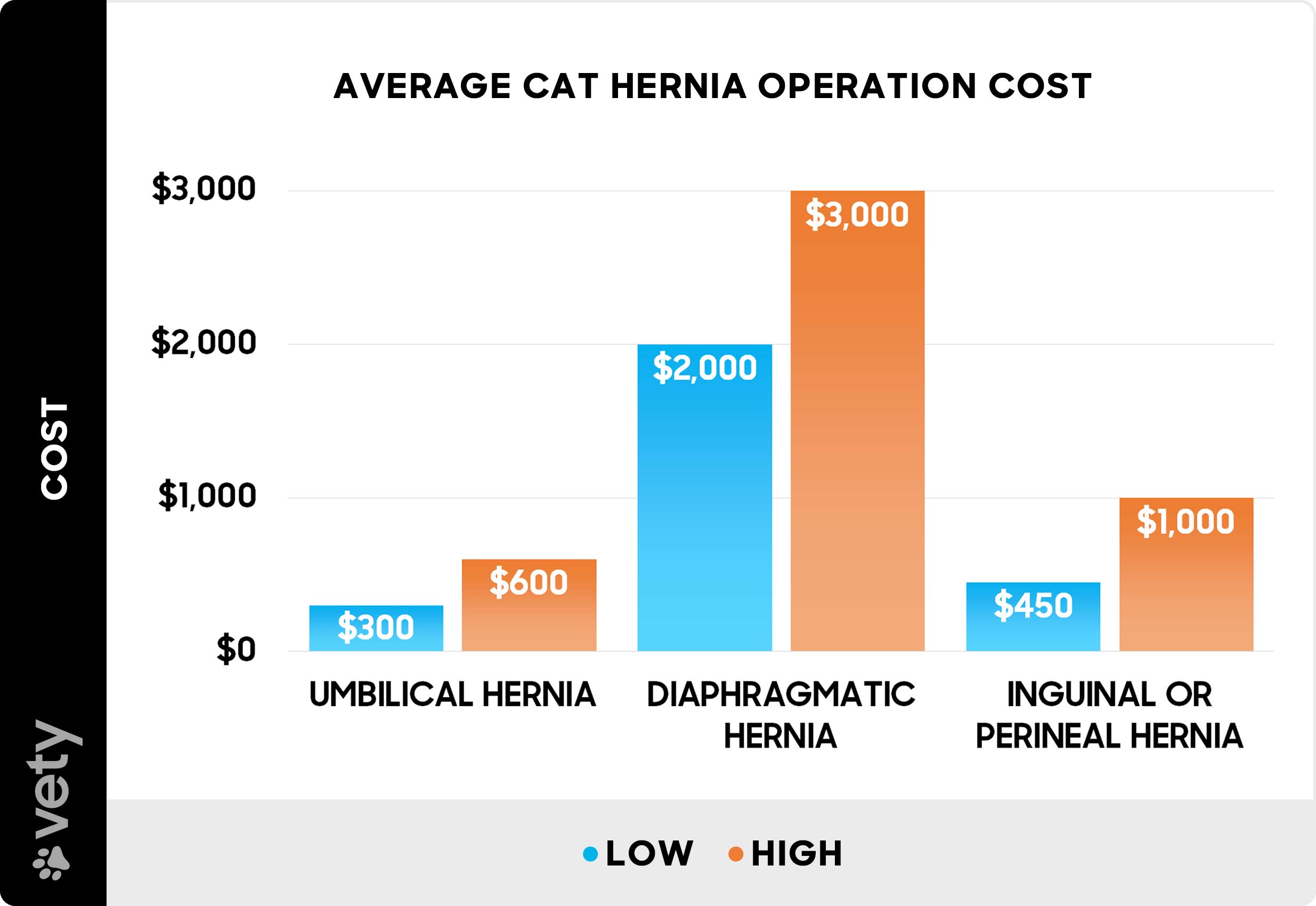
Cat hernia surgery costs $300 to $600 to repair an umbilical hernia, $450 to $1,000 for an inguinal or perineal hernia, and $2,000 to $3,000 for a diaphragmatic hernia. The total cost depends on the complexity of the case, the diagnostic tests needed, the veterinary provider, and your location.
| Hernia type | Average cost |
|---|---|
| Umbilical hernia | $300 – $600 |
| Diaphragmatic hernia | $2,000 – $3,000 |
| Inguinal or perineal hernia | $450 – $1,000 |
Cat hernia surgery cost factors
Several factors can affect the cost of hernia surgery for your feline family member:
Complexity of the case: Simple umbilical hernias are less expensive to repair than complicated diaphragmatic hernias that require chest surgery. Costs are lowest for umbilical hernias repaired during spay or neuter surgery. Emergency surgeries and cases where organs are strangulated or damaged cost significantly more due to the urgency and complexity involved.
Pre-surgical tests: Your veterinarian may recommend X-rays, an ultrasound, or blood work before surgery. Common tests and fees include:
A cat blood test costs $50 to $150+.
Cat X-rays cost $100 to $250 per image.
A cat ultrasound costs $200 to $600.
Location: Veterinary costs vary significantly by geographic region. Vets in urban areas and regions with higher costs of living typically charge more compared to those in rural areas.
Veterinary clinic or hospital: General practice veterinarians usually charge less than specialty hospitals or emergency clinics. However, complex hernias may require a board-certified veterinary surgeon, which increases the cost.
Post-op medications: Pain management medications, antibiotics, and other post-surgical treatments can add to the total cost but are essential for your cat's recovery and comfort.
Pet insurance may cover the cost of hernia surgery for your cat if your policy is in effect before symptoms develop. Many policies cover surgeries but exclude pre-existing conditions. Pet insurance costs $15 to $50 per month.
What is a hernia in cats?
A hernia occurs when an organ or tissue pushes through a weakness or opening in the muscle wall or connective tissue that normally holds it in place. In cats, this can happen in several areas of the body, creating a bulge or protrusion under the skin.
Some hernias are present from birth due to incomplete development, while others result from trauma such as being hit by a car or experiencing blunt force injury. Left untreated, hernias can lead to serious complications if organs become trapped or their blood supply is cut off.
Types of hernias in cats
There are several different types of hernias in cats:
Umbilical hernia
Umbilical hernias are the most common type in cats and occur near the belly button where the umbilical cord was attached. They're usually congenital, meaning kittens are born with them when the abdominal muscles don't close properly after birth.
These hernias often appear as a small, soft bulge on the abdomen. While small umbilical hernias may close on their own as a kitten grows, larger ones typically require surgical repair to prevent intestines or other abdominal contents from becoming trapped.
Diaphragmatic hernia
A diaphragmatic hernia happens when there's a tear or hole in the diaphragm—the muscle that separates the chest cavity from the abdomen. This allows abdominal organs like the stomach, intestines, or liver to move into the chest cavity, compressing the lungs and heart.
This type is most often caused by obesity or traumatic injury and is considered a medical emergency. Cats with diaphragmatic hernias may show difficulty breathing, rapid breathing, reduced appetite, or lethargy and require immediate veterinary attention.
Hiatal hernia
A hiatal hernia is a rare type of diaphragmatic hernia where part of the stomach slides up through the diaphragm into the chest cavity through the esophageal opening. This can cause vomiting, regurgitation, difficulty swallowing, and excessive salivation.
Inguinal hernia
Inguinal hernias occur in the groin area where abdominal contents push through the inguinal canal. These hernias may contain intestines, bladder, or the uterus and typically require surgical correction.
Inguinal hernias are uncommon in cats. They are occasionally seen in female cats, especially pregnant ones, but they can also occur in senior cats and those straining from constipation.
Perineal hernia
Perineal hernias develop when the muscles of the pelvic diaphragm weaken, allowing abdominal or pelvic contents to protrude beside the rectum or anus. This creates a noticeable swelling beside the tail or under the skin near the anus.
While more common in older male dogs, perineal hernias can occasionally occur in cats, particularly intact males. Affected cats may strain to defecate, have difficulty urinating if the bladder becomes trapped, or show swelling near the tail base. Surgical repair is necessary to restore the pelvic muscle structure and prevent serious complications.
Cat hernia surgery & treatment
Hernia surgery involves pushing the displaced organs back into their proper position and closing the opening or weakness in the muscle wall. Your veterinarian will perform the procedure while your cat is under general anesthesia, making an incision over the hernia site to access and repair the defect.
For umbilical hernias, the surgery is relatively straightforward. Diaphragmatic hernias are more complex, requiring chest surgery to reposition organs and repair the diaphragm. In some cases, synthetic mesh may be used to strengthen the repair, especially for larger hernias.
Recovery
Most cats recover well from hernia surgery with proper post-operative care. Your cat will need to rest quietly with restricted activity to allow the surgical site to heal. The average recovery time is 10 to 14 days, but some inguinal or umbilical hernia surgery sites may heal in 7 to 10 days, while diaphragmatic repairs may require longer.
Your veterinarian will provide pain medication and may prescribe antibiotics to prevent infection. You'll need to monitor the incision daily for signs of swelling, redness, or discharge. Your cat should wear an Elizabethan collar (cone) to prevent licking or chewing at the stitches.
Cat hernia FAQs
How long can a cat live with a hernia?
A cat can live with a small, uncomplicated umbilical hernia for years, though surgery is still recommended to prevent future complications. However, diaphragmatic hernias are life-threatening emergencies that require immediate treatment. Cats cannot live long with this type untreated.
The timeline for surgery depends on the hernia type and severity. Small umbilical hernias can be monitored and repaired during routine spay or neuter surgery, while traumatic hernias need urgent surgical intervention.
What does a cat hernia look like?
A hernia typically appears as a soft, sometimes squishy bulge under the skin that may be reducible, meaning you can gently push it back in. Umbilical hernias create a lump near the belly button, while inguinal hernias appear as swelling in the groin area.
Diaphragmatic hernias are internal and sometimes don't show an external bulge. Symptoms include labored breathing, pale gums, or your cat sitting in a hunched position.
If you notice any unusual swelling on your cat or breathing difficulties, contact your veterinarian promptly.
Are cat hernias painful?
Small, uncomplicated hernias are not always painful and may go unnoticed by your cat. However, they can intermittently cause discomfort, especially if they involve abdominal organs. Hernias become more painful if the tissue becomes trapped (incarcerated) or if the blood supply is cut off (strangulated), which is a medical emergency.
Diaphragmatic hernias cause discomfort due to breathing difficulties and pressure on the lungs and heart. If your cat shows signs of pain, stops eating, has trouble breathing, or the hernia suddenly becomes firm or discolored, seek immediate veterinary care.
Can a cat get a hernia after being spayed?
Yes, a cat can develop an incisional hernia after being spayed, though it's uncommon. This happens when the surgical incision doesn't heal properly and abdominal contents push through the weakened muscle wall at the surgery site.
Incisional hernias are more likely if your cat is too active during recovery, has an infection, or is overweight. Follow your veterinarian's post-operative care instructions carefully to minimize this risk. Improper suture technique during spay/neuter surgery can also cause a hernia.
Questions to ask your veterinarian
Ask your veterinarian these important questions to ensure you understand the surgical procedure, risks, and recovery process:
What type of hernia does my cat have, and how urgent is the surgery?
What diagnostic tests does my cat need before surgery, and what will they cost?
What are the risks and potential complications of this surgery?
What's included in the surgery cost estimate, and are there any additional fees I should expect?
How long will my cat's recovery take, and what restrictions will be necessary?
What signs of complications should I watch for after surgery?
Will my cat need follow-up appointments, and are they included in the surgery cost?
When to seek immediate veterinary care
Certain hernia symptoms require emergency veterinary attention. If your cat shows difficulty breathing, rapid breathing, pale or blue gums, or sudden collapse, seek immediate care. These signs often indicate a diaphragmatic hernia or strangulated hernia.
A hernia that suddenly becomes firm, hot, painful to the touch, or changes color needs urgent evaluation. Similarly, if your cat stops eating, vomits repeatedly, seems lethargic, or shows signs of abdominal pain, contact your veterinarian right away. Early intervention can prevent life-threatening complications and may reduce overall treatment costs.
Using our proprietary cost database, in-depth research, and collaboration with industry experts, we deliver accurate, up-to-date pricing and insights you can trust, every time.